
 Image 1 of 2
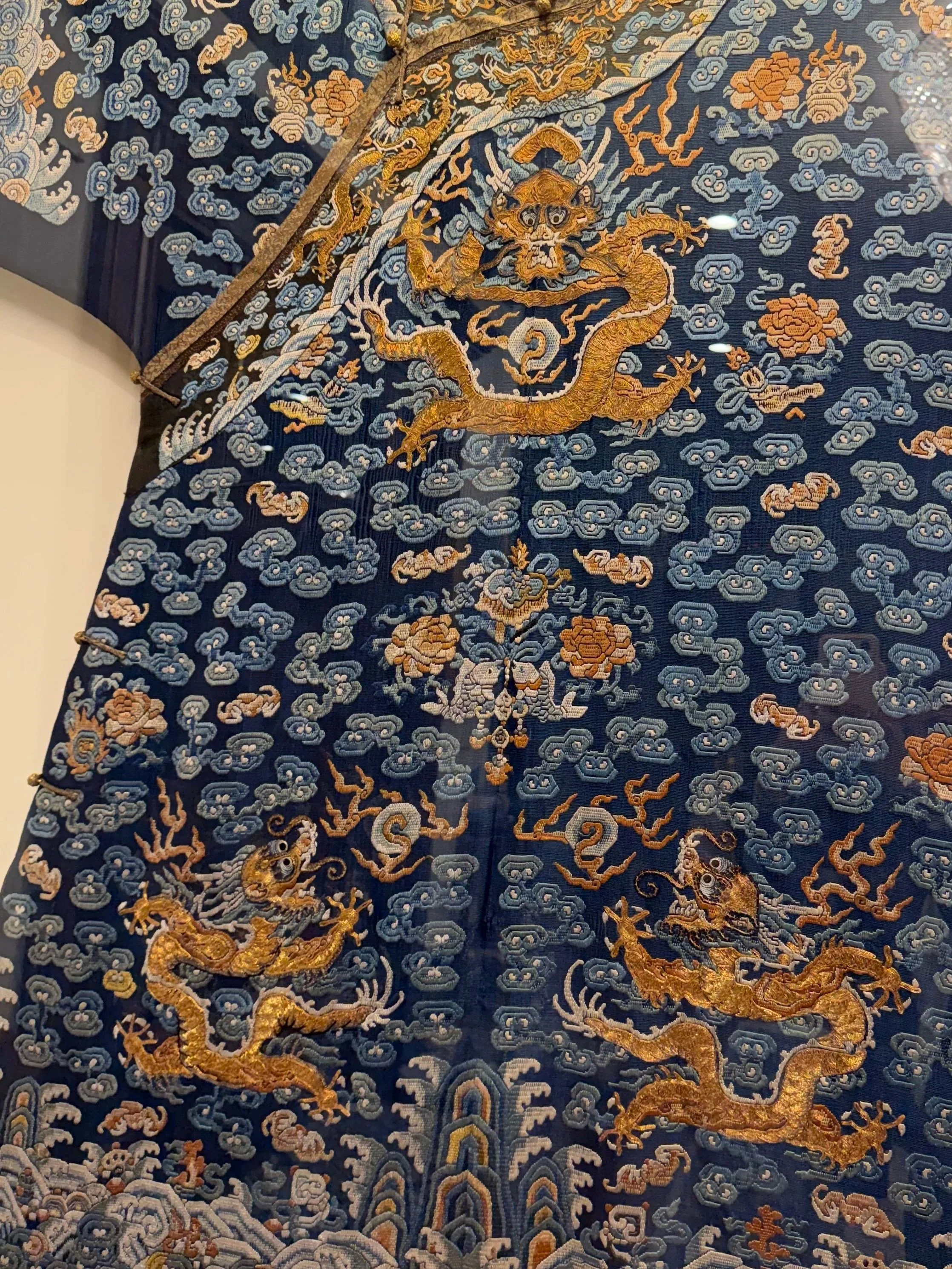 Image 2 of 2
-
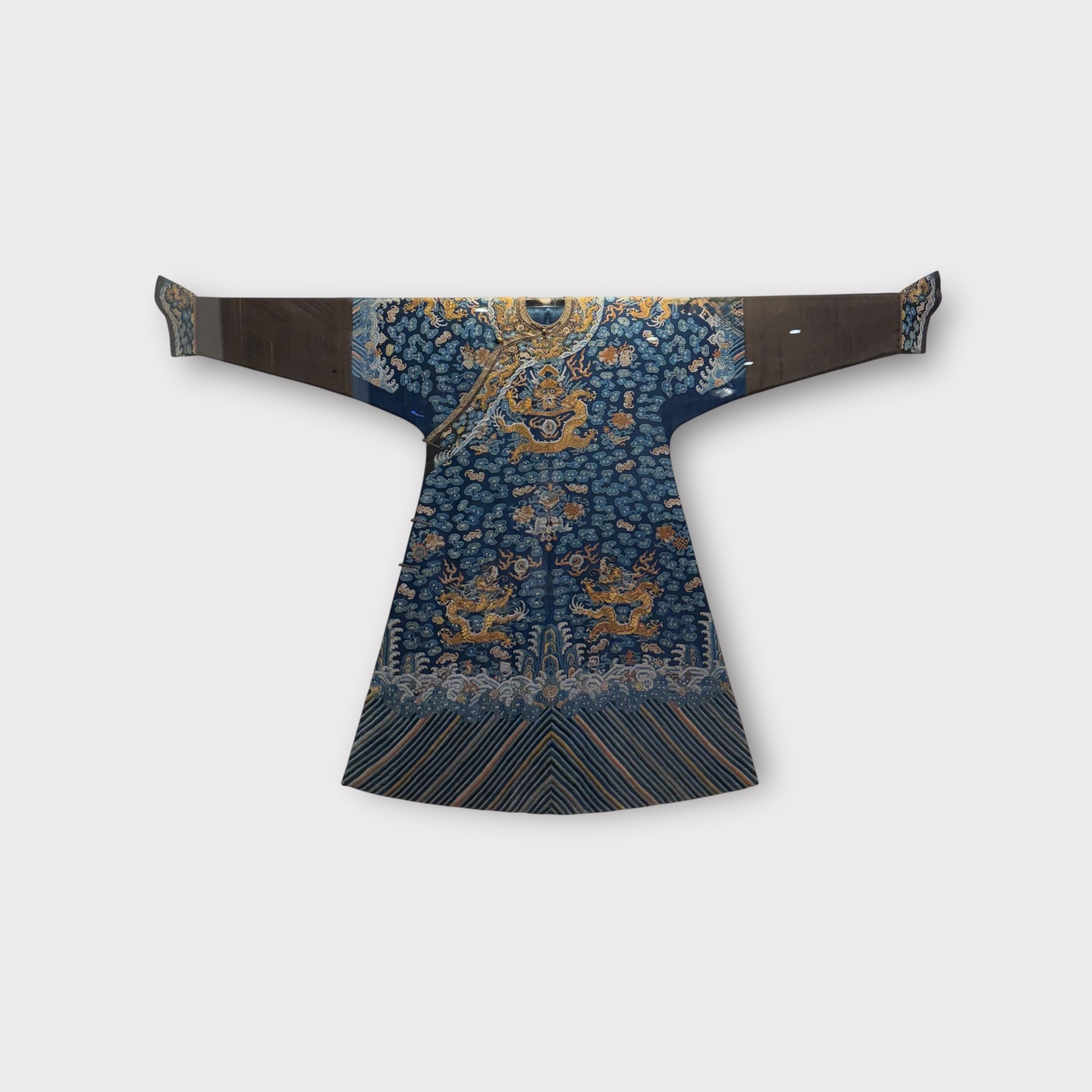
Period: Qing dynasty (1644–1911)
Date: 17th century
Culture: China
Medium: Silk and metallic thread tapestry (kesi)
Dimensions: 56 × 74 in. (142.2 × 188 cm)
Classification: Costume / Textile -
Imperial court textiles from the Qing dynasty occupy a specialized but well established position within the market for Chinese works of art. Collectors place particular emphasis on robes executed in kesi tapestry because of the technical complexity of the weaving process and the historic association of the technique with imperial workshops.
Examples of this scale and quality appear only occasionally on the market, as many comparable works reside in museum collections or long held private estates. When they do surface, attention tends to focus on the precision of the weaving, the strength of the design, and overall preservation.
In recent years, there has been renewed interest in historically significant textiles among collectors of Asian art and institutions expanding their representation of court material culture. Exceptional examples continue to attract steady attention in both auction and private transactions, particularly when supported by clear provenance and strong craftsmanship.