
 Image 1 of 3
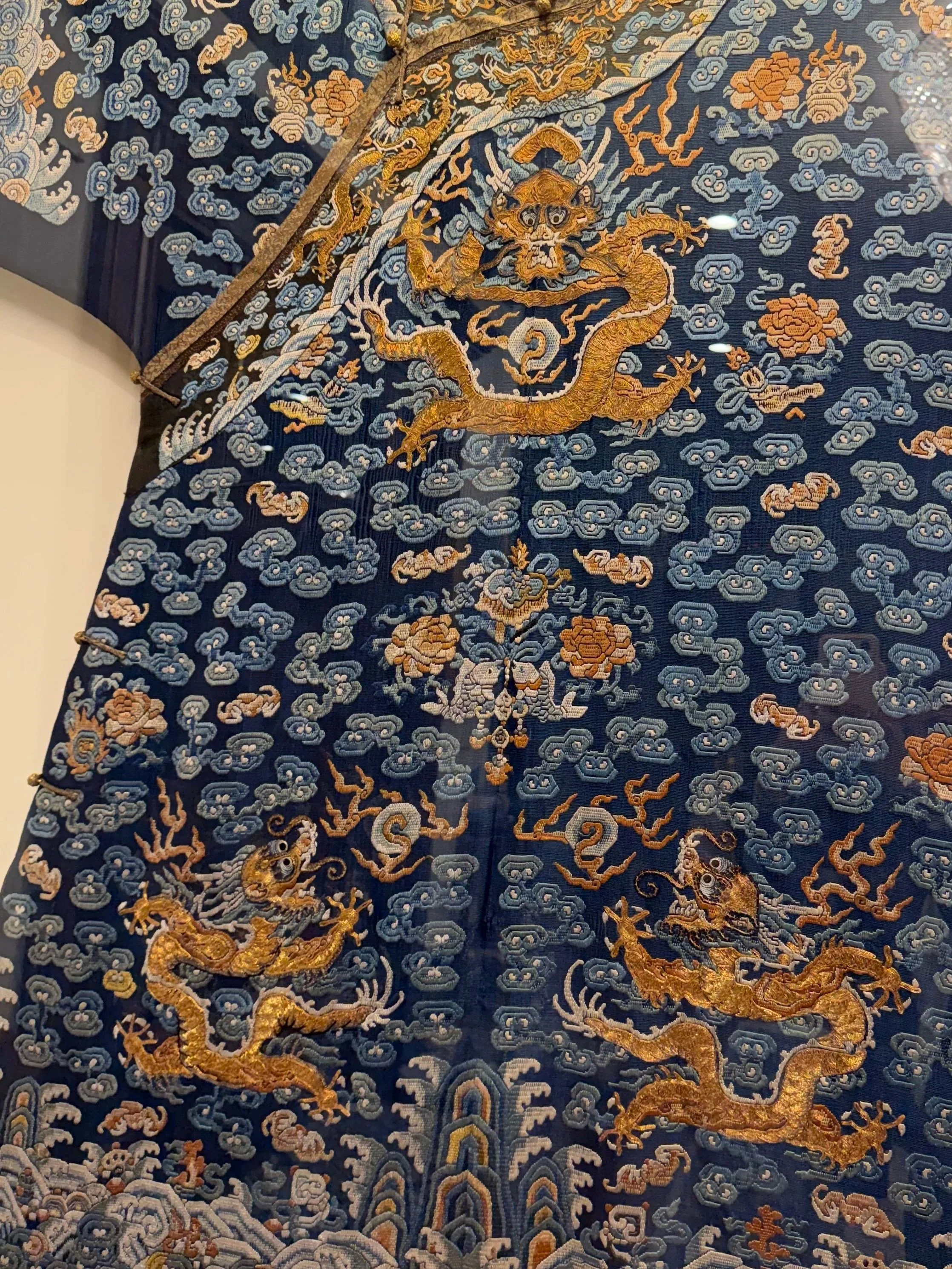 Image 2 of 3
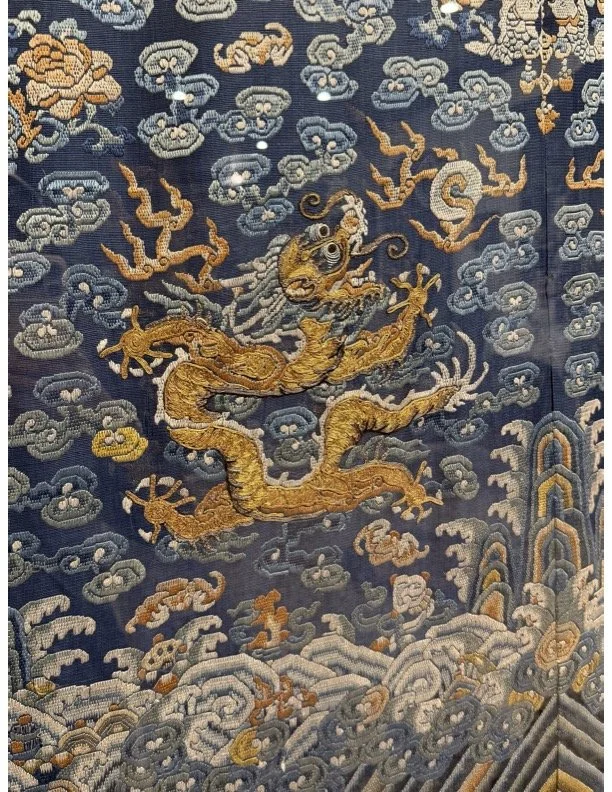 Image 3 of 3
-
Category: Object of Interest
Type: Imperial Court Textile / Ceremonial Robe
Period: Qing Dynasty (1644–1911)
Date: 17th–19th century
Culture: China
Material: Silk kesi tapestry with metallic thread highlights
Origin: Imperial workshops, China (exact atelier not specified)
Dimensions: 56 × 74 in. (142.2 × 188 cm)
Classification: Costume / Textile ObjectCondition:
Overall preservation consistent with age and historic textile use. Expected surface wear, minor fibre fragility, and tonal variation across woven fields in keeping with period production.Documentation:
Attribution based on textile technique, iconography, and courtly construction methods.Market Presence: Active
Availability: Limited
Demand: Selective -
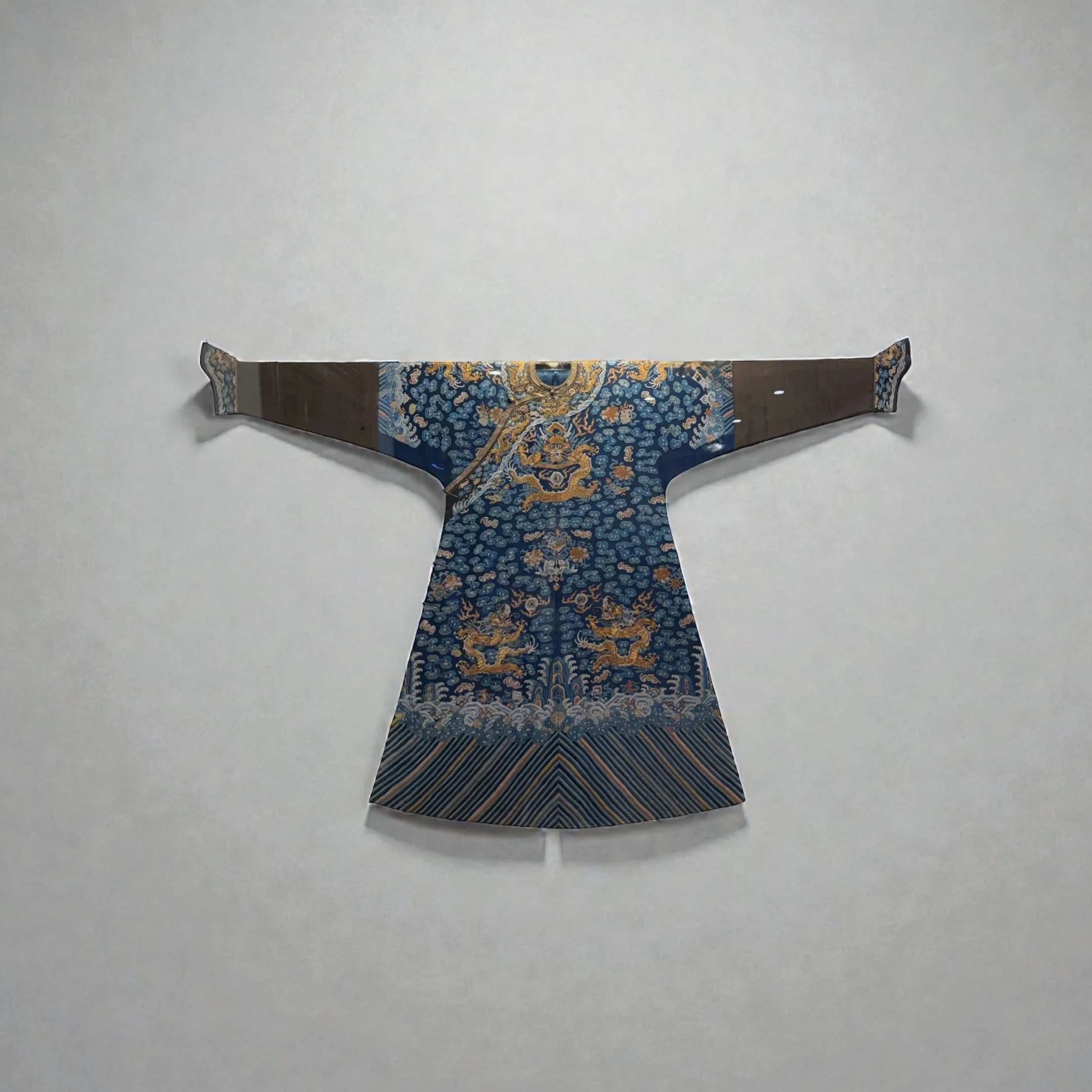
Imperial court robes of the Qing dynasty represent some of the most technically sophisticated textile productions in Chinese material culture. Executed in kesi—a labour-intensive silk tapestry technique in which each colour area is individually woven—these garments achieve a painterly depth and precision that distinguishes them from standard woven silks.
The present example reflects the highly codified visual language of the imperial court, where dragon motifs, cloud forms, and structural banding operated as symbols of authority, cosmic order, and rank designation. Each element was carefully regulated, transforming the robe into a structured system of meaning as much as an article of dress.
Produced within imperial workshops by highly trained artisans, surviving examples of this quality are increasingly scarce. Their significance lies not only in their technical execution but in their ability to convey the intersection of craft, governance, and symbolism at the centre of Qing visual culture.
-
Collector interest in imperial court robes is driven by both their sculptural textile presence and their historical resonance within Chinese dynastic culture. Examples retaining strong compositional clarity, legible iconography, and structural integrity are particularly sought after, especially those where kesi weaving remains well-defined.
Market appreciation is typically shaped by preservation, visual balance, and the readability of imperial motifs, rather than size alone.
Tier II — Established Market / Selective Quality
All appraisals featured on this site are presented solely as portfolio work and are not available for purchase. Estimated values are provided for reference purposes only and do not constitute a formal appraisal or guarantee of market value. Estimated values reflect market conditions at the time the appraisal was conducted and may not be accurate at any other point in time, as pricing markets vary throughout time. For further information or to enquire about our services, please contact us at contact@sableshouse.co