
 Image 1 of 4
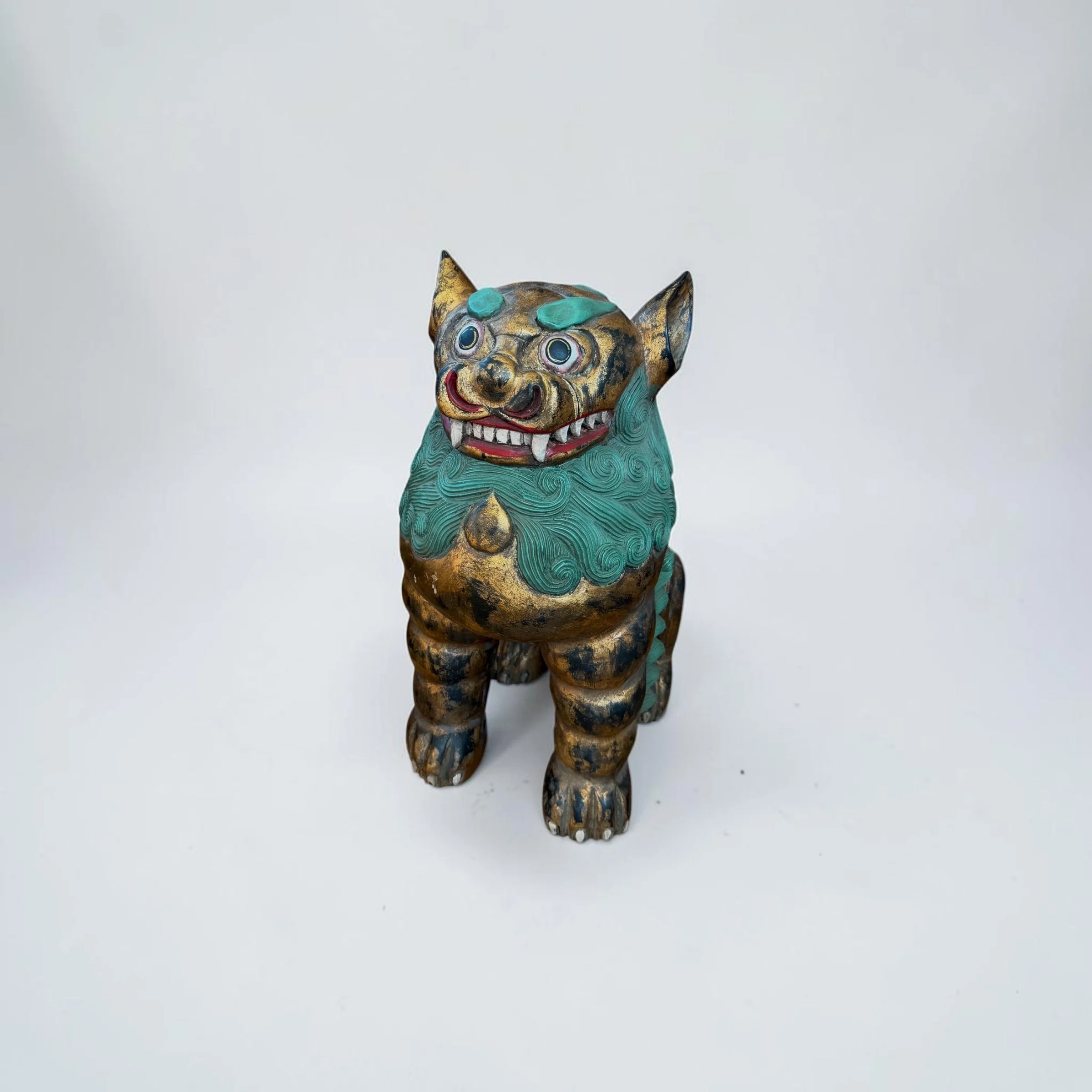 Image 2 of 4
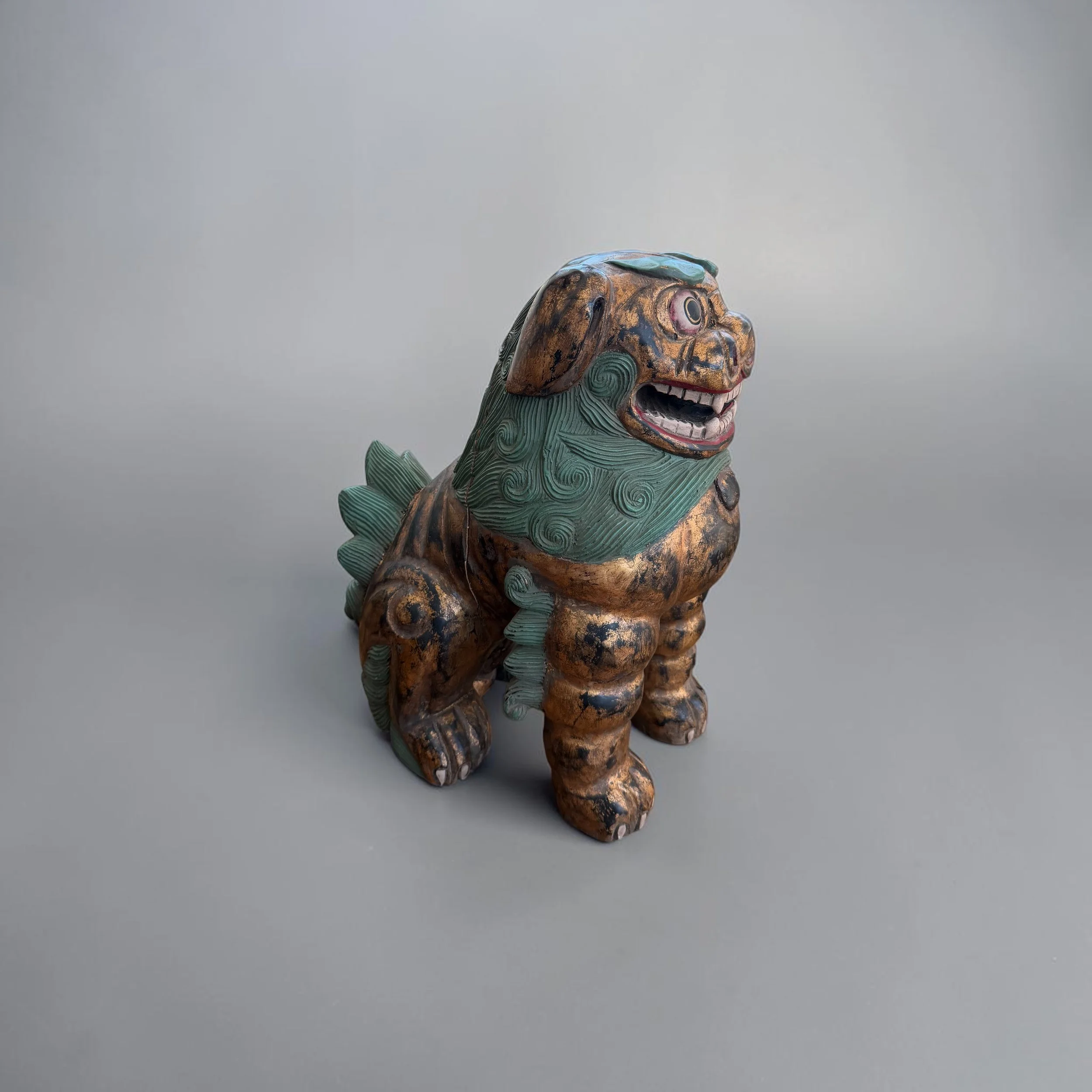 Image 3 of 4
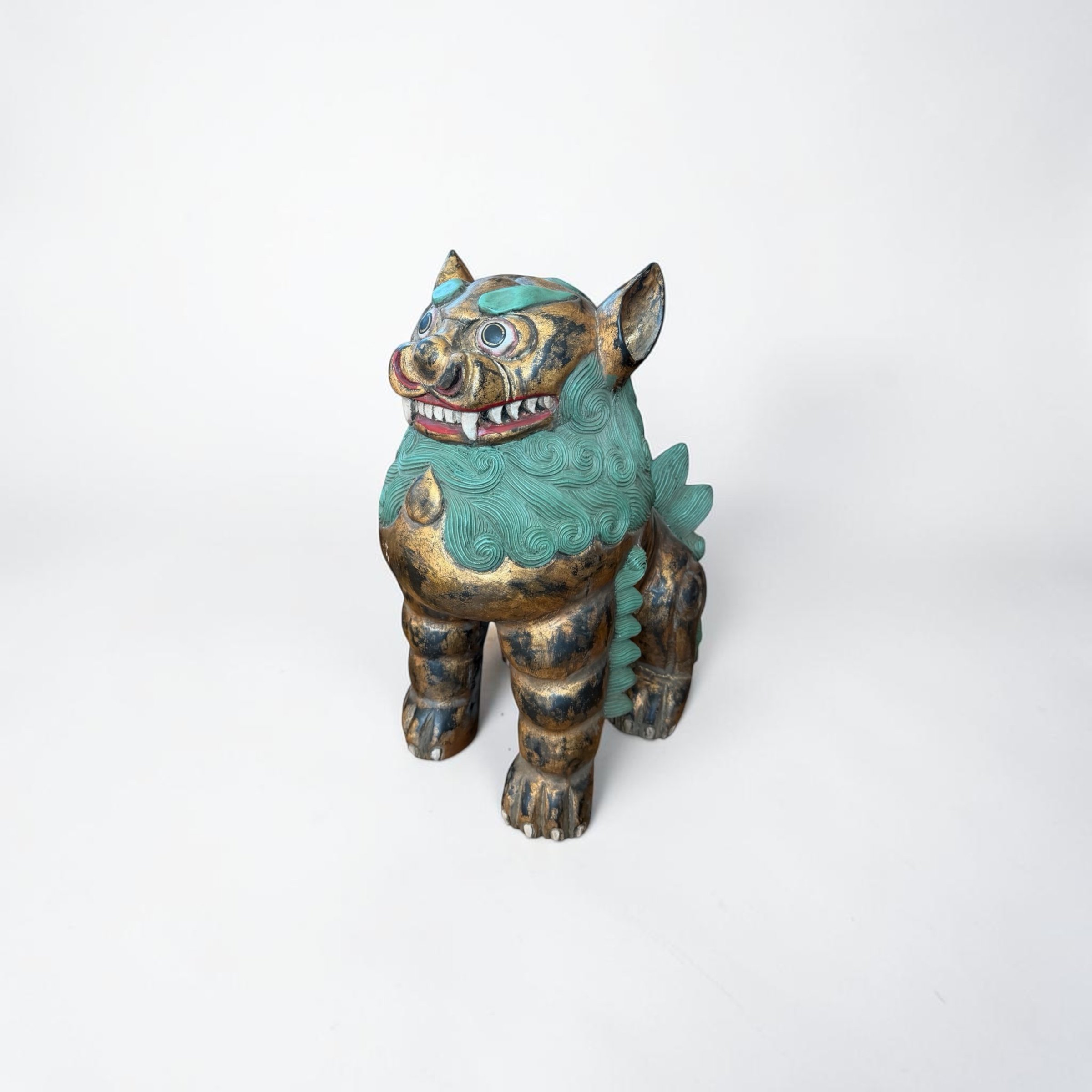 Image 4 of 4
-
Origin & Dating
Edo late period (early-mid 1800s) through Meiji era (1868–1912)
Rural Japanese temple commission
Likely regional origin — Tohoku, Chubu, or rural Kansai
Asymmetry between figures suggests possible master and apprentice collaboration within the same workshop
Not a reproduction — factory pieces would never introduce this level of stylistic inconsistency
Materials & Construction
Carved wood with polychrome painted finish
Wear and paint loss consistent with Edo-Meiji age range
The Figures
Depicted as lions, not dogs, despite the common name "Shishi"
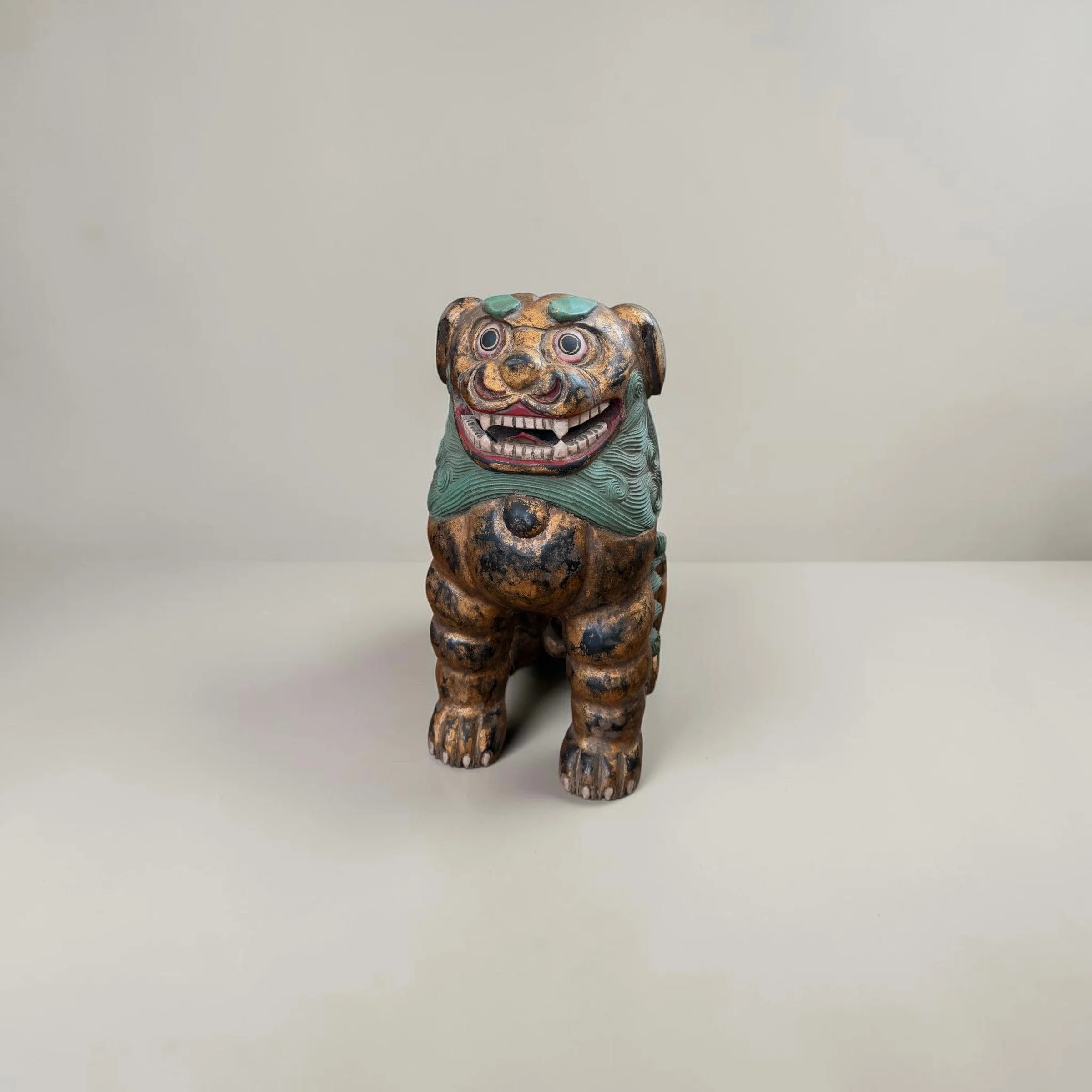
Open-mouth figure — Male (Yang), represents the heavens, breathing life outward
Closed-mouth figure — Female (Yin), represents the earth, breathing life inward
Together the pair forms the Buddhist sacred sound "Om"
Ear Detail
Closed-mouth female has pointed upward ears — consistent with Tohoku and rural Chubu regional traditions
Open-mouth male has rounded downward ears — the more conventional depiction
This asymmetry is a hallmark of regional folk temple tradition rather than formal urban workshop production
Symbolism
Protectors against negative energy
Represent aristocratic status
Traditional guardians placed at the threshold of sacred spaces
-
This rare pair of polychrome carved wood Shishi guardians represents a compelling example of regional Japanese folk temple art, dating to the late Edo period through the Meiji era (early-mid 1800s to 1912). Rooted in Buddhist and Shinto protective tradition, Shishi have long served as threshold guardians, warding off negative energy and signaling aristocratic and sacred authority.
What distinguishes this particular pair from formal workshop production is the asymmetry in ear treatment between the two figures. The closed-mouth female carries pointed upward ears, a detail consistent with regional traditions observed in Tohoku and rural Chubu, while the open-mouth male features rounded downward ears in the more conventional manner. In major urban workshops of Kyoto and Edo, both figures would typically conform to a unified stylistic standard. The divergence seen here points strongly to a rural or regional temple commission, where local craftsmen exercised greater artistic freedom, and raises the possibility of a master and apprentice collaboration, a practice common in the production of large-scale temple pieces.
Iconographically, the pair adheres to classical convention. The open-mouthed male embodies Yang, representing the heavens and the outward breath of life, while the closed-mouthed female embodies Yin, representing the earth and the inward breath. In unison, their open and closed mouths form the sacred Buddhist sound "Om," making the pair not merely decorative, but devotional in purpose.
The wear and paint loss present across both figures are entirely consistent with their estimated age, lending authenticity and character to the patina. This regional specificity, combined with the folk art asymmetry and evidence of age, makes this pair a meaningful acquisition for the serious collector or institution seeking a piece with traceable geographic and cultural provenance.
-
Shishi guardian pairs of this character, rural commission, polychrome wood, with demonstrable age, are increasingly difficult to source. The market for Japanese folk temple art has shifted considerably in recent years, with institutional interest from museums and private collectors narrowing the availability of pieces that carry genuine provenance indicators rather than generalised "Japanese antique" attributions.
What elevates this pair beyond decorative appeal is precisely what makes it academically interesting. The regional asymmetry is not a flaw, it is a fingerprint. Pieces that can be anchored to a geographic tradition, even provisionally, hold stronger long-term value than stylistically generic examples, and this pair carries enough internal evidence to support a serious attribution conversation.
Condition should be assessed with the patina in mind. The wear and paint loss are consistent with authentic age and should be preserved rather than restored. Any attempt to clean, consolidate, or retouch the painted surface without specialist conservation advice risks diminishing both the integrity and the value of the piece. If long-term preservation is a priority, storage in a stable environment away from direct light and humidity fluctuation is advised.
For buyers with an interest in Buddhist material culture, Edo period folk art, or Japanese regional craft traditions, this pair represents a focused and considered acquisition. Opportunities to purchase temple-origin Shishi with this level of attributable detail outside of auction, and at the point of first retail, are rare.
All appraisals featured on this site are presented solely as portfolio work and are not available for purchase. Estimated values are provided for reference purposes only and do not constitute a formal appraisal or guarantee of market value. Estimated values reflect market conditions at the time the appraisal was conducted and may not be accurate at any other point in time, as pricing markets vary throughout time. For further information or to enquire about our services, please contact us at contact@sableshouse.co