
The Collector’s Mind
On the psychology of collecting: what separates an accumulation from a collection, and what a body of objects reveals about the mind behind it.
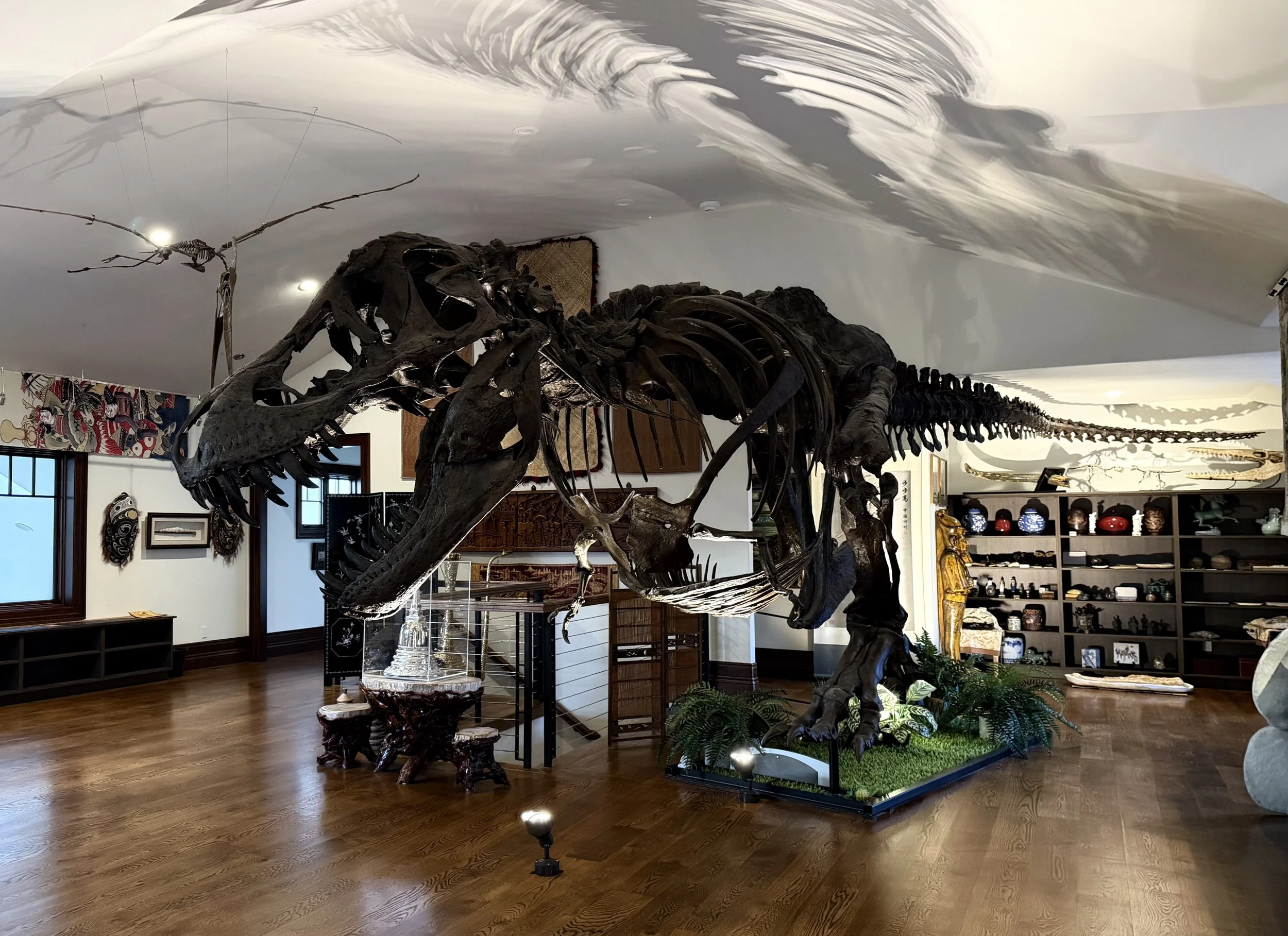
“The Collector” Photograph © 2026 by SablesHouseCo.
A collection is not an accumulation. The distinction is easy to state and difficult to live by, and the gap between the two is where character is revealed.
Every object a person chooses to live with says something. The choice of what to acquire, what to pass on, what to hold and what to release over time; these are not aesthetic decisions in the decorative sense. They are decisions about attention, about what a person believes has weight, and about what they trust to carry meaning beyond the moment of acquisition. A collection, built with genuine intention over time, is one of the most legible self-portraits a person can produce.
What the object holds
The serious collector is rarely motivated by what an object looks like in isolation. What compels them is what the object holds: the history embedded in its making, the hands it has passed through, the period it represents, the decision someone else once made to create it. An object with provenance is an object with a life before you. The collector who understands this is not acquiring a thing. They are acquiring a continuation.
This is why the most considered collections are rarely thematic in the obvious sense. They do not announce themselves. A room that has been lived in by a serious collector does not look like a category. It looks like a mind. The objects have been chosen not because they belong to the same family but because they were each, at the moment of acquisition, the right answer to a question the collector was asking.
The eye as intelligence
Taste is often treated as a matter of preference, as though it were simply a question of what one happens to like. The collector knows otherwise. Taste, developed seriously over time, is a form of intelligence. It is the ability to see what an object is actually doing: how it sits in space, what it asks of the room around it, what it gives back over years of looking. The collector's eye is trained not toward beauty in the abstract but toward rightness, a quality that is harder to define and easier to recognize.
What a collection reveals, then, is not simply what a person finds beautiful. It reveals how they see. Two people can look at the same object and one will pass over it while the other will know, with a certainty that is difficult to articulate, that it belongs with them. That certainty is the product of years of looking, of being wrong, of learning what the wrong acquisition feels like and calibrating accordingly. The collection that results from that process is a record of a trained eye at work.
What is left out
A collection is defined as much by what is absent as by what is present. The collector who has developed genuine discipline knows that restraint is not deprivation. It is the condition that makes the collection coherent. Every object that does not belong dilutes the ones that do. The ability to walk away, to recognise that something is good without being yours, is the mark of a collector who has moved beyond acquisition as appetite and into acquisition as judgment.
This is where the collector diverges most sharply from the accumulator. The accumulator fills space. The collector edits it. The collection that results from sustained editing over time has a quality that is immediately felt in a room, even by someone who cannot name it. It is the quality of intention made visible.
The collection as self-portrait
What does a collection ultimately reveal about the person who built it? What it reveals is their relationship to time. The serious collector acquires for duration. They choose objects that they believe will outlast the moment, that will continue to reward attention over years and decades, that will mean something to whoever comes after them.
This is a particular kind of confidence. It requires believing that your eye is worth trusting, that the objects you have chosen will hold their claim on attention long after the context in which you found them has changed. It requires patience with the process of looking, tolerance for uncertainty, and a willingness to be guided by judgment rather than consensus.
A collection built on those terms is not a display. It is a position. It says, with clarity and without apology, this is what I believe has weight. This is what I think will last. This is how I see.
At Sables, we work with collectors who collect this way. The objects we source, appraise, and place are chosen with the same standard in mind: not what is available, but what is right.
